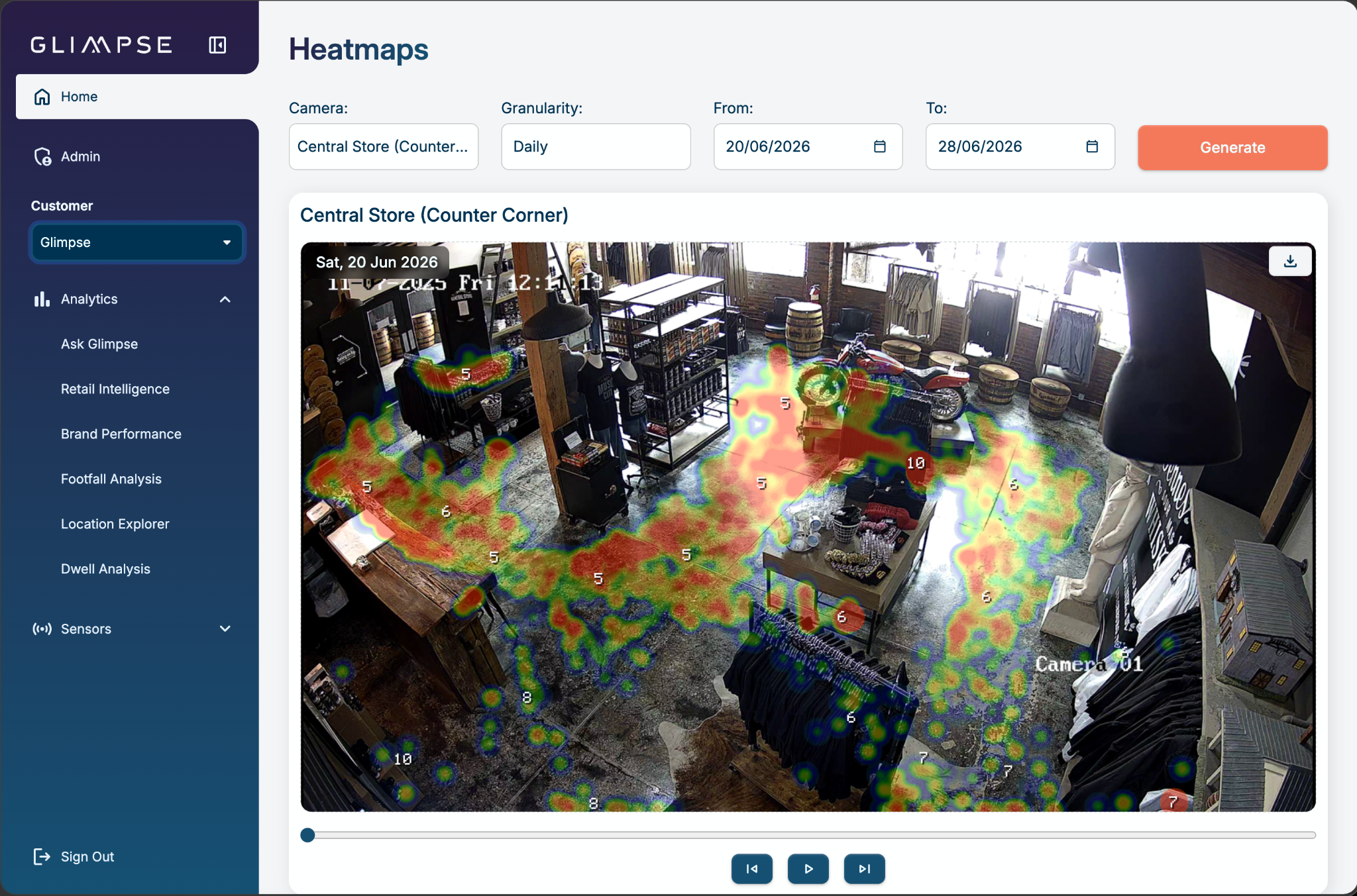
The Physical Visibility Gap is Glimpse's name for a problem most multi-channel retailers recognise. Online, a retailer knows how many people arrived, where they came from, what they looked at, how long they stayed, where they dropped out and what they bought. In the store, which for most retailers is still where the majority of the revenue is taken, it knows the sales value and, if it has a counter, the footfall. Everything that happens between the door and the till is invisible.
The gap has a cost. Decisions about staffing, layout, ranging and store investment are made with less evidence than a decision about a web page. Store managers are judged on sales without anyone knowing whether the problem was fewer people passing, fewer coming in, or fewer buying. And the online team, with its complete funnel, sets the standard the stores are measured against without the stores having the same instruments.
Closing the gap means giving physical stores the same funnel visibility: how many people were available, how many came in, what they did inside, and how many bought. Each stage has a measure. Available market is counted as passers-by; the door is footfall and capture rate; the shop floor is dwell, flow, heatmaps and queues; the till is conversion rate, visit duration and time to transaction.
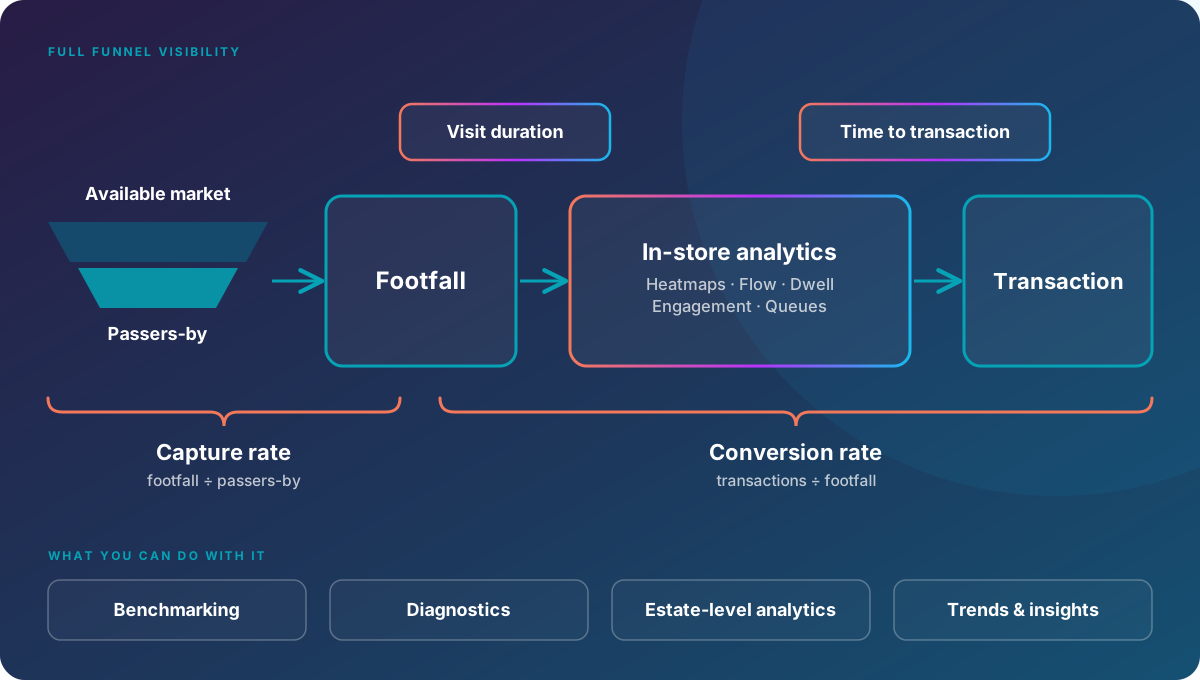
Most of this can be measured with equipment stores already own. CCTV cameras cover the doors and the floor of almost every store. Combined with computer vision technology they become the sensors to build the funnel.
Glimpse's approach starts from this gap: footfall counting from existing cameras as the foundation, the rest of the funnel built on it, and the findings reviewed with the retailer rather than left in a dashboard.