Footfall is the count of people entering a store, shopping centre, station or any other defined space during a period: an hour, a trading day, a week. It is the most basic measure of physical demand and the number every other in-store metric is built on. In the United States the same measure is usually called foot traffic or store traffic; in the UK and Ireland, footfall.
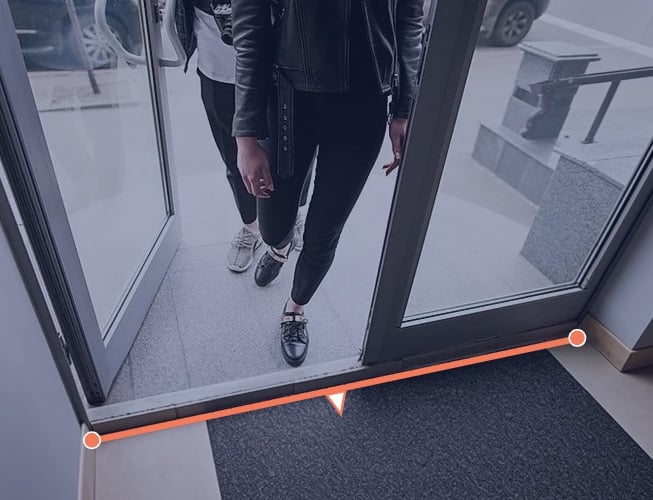
A footfall figure is only useful if it is clear what was counted. A good footfall system counts people, not movements. For example, someone who enters the store then immediately steps out then back in again should only be counted once. Direction matters too. Counting entries and exits separately lets you calculate occupancy and track this throughout the day.
Footfall is also the denominator of conversion rate (transactions ÷ footfall) and the numerator of capture rate (footfall ÷ passers-by). That is why accuracy matters more than it first appears: a count that drifts by 10 % moves every ratio built on it by the same amount, and store-to-store comparisons become meaningless.
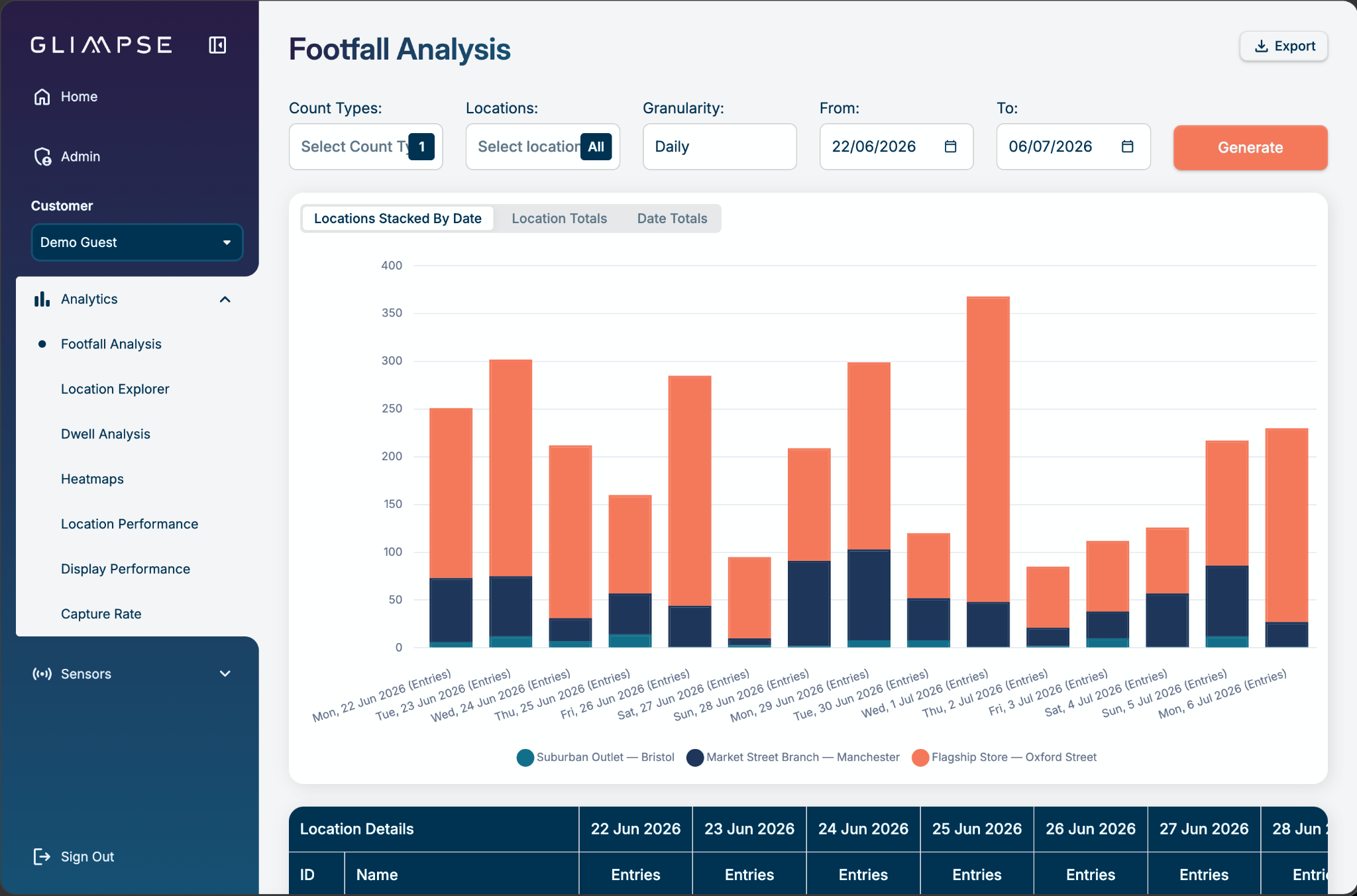
Footfall is typically reported by entrance, by store and across an estate, with minute-level data rolled up to hours and days. Common uses include matching staff rotas to the hours people actually arrive, measuring the effect of a window display or a promotion, benchmarking stores on a like-for-like basis, and settling rent and turnover discussions with landlords using a number both sides trust.
Glimpse counts footfall from existing CCTV cameras using virtual lines drawn across each entrance, de-duplicating people seen by more than one camera so that a visitor counts once per visit. Where there is no suitable camera, a Glimpse Sensor or a standalone Glimpse in a Box device counts instead. Every deployment is validated against manual counts.
Also known as: Foot traffic