A people counting system is everything between a person walking through a door and a number a manager can act on. It has three parts: something that senses people (a camera, an overhead sensor or a beam), software that turns what is sensed into counts, and a data platform that stores the counts, checks them, and reports them by entrance, store, hour and estate. A people counter is the device at the door; a people counting system is the device, the software and the data together.
The distinction between the two is important because the device is the smallest part of the job. Counting one door is easy. Counting forty stores with several doors each, de-duplicating people who enter by one door and leave by another, validating every count against reality, and delivering a figure to the right person on Monday morning is the system's work, and it is where systems differ.
What a people counting system consists of
Sensing. The system needs a view of each entrance. That is either a dedicated people counter mounted above the door, a purpose-built sensor on a shopfront or display, or the CCTV cameras the store already has. Which one depends on the site and on what else the system is expected to measure.
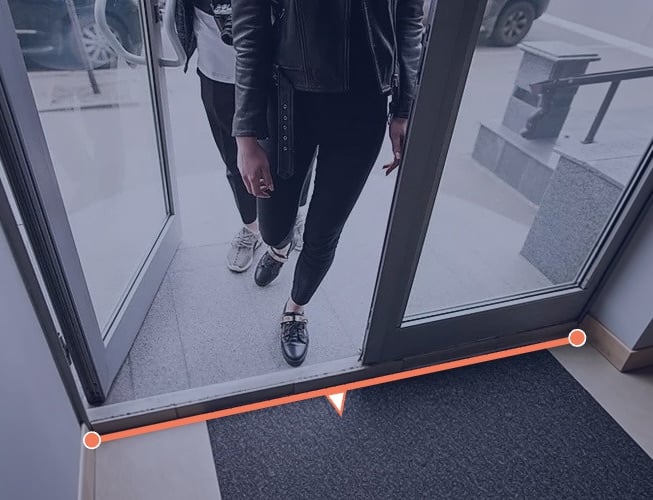
Processing. Software turns the sensor's output into a count. In a camera-based system this is computer vision: detecting each person in the frame, tracking them from frame to frame, and counting each track that crosses a virtual line in a known direction. Where that software runs matters for privacy: edge processing does it on a device inside the building, so only counts leave the site and no video is stored.
Data platform. Data from every entrance arrives in one place, multiple entries from the same person are de-duplicated, then counts are organised into a hierarchy: estate, region, store, entrance. From there they are reported in a portal, sent as scheduled reports, and made available through an API so they can be joined with sales, rota and marketing data.
Types of people counting system
Systems are usually described by their sensing technology, because that sets what they can and cannot see.
Beam counters register a break in an infrared beam across a doorway. They are cheap and simple, cannot tell two people walking abreast from one, and cannot tell who is entering from who is leaving.
Overhead counters look straight down at the threshold using thermal, stereo or time-of-flight imaging. They are the most common dedicated device. They are accurate at the door, but blind to everything beyond it. Each entrance needs its own unit.
Wi-Fi and Bluetooth systems count phones rather than people. They need no line of sight but sample only the devices they can see, and because phones randomise their identifiers the sample changes from visit to visit.
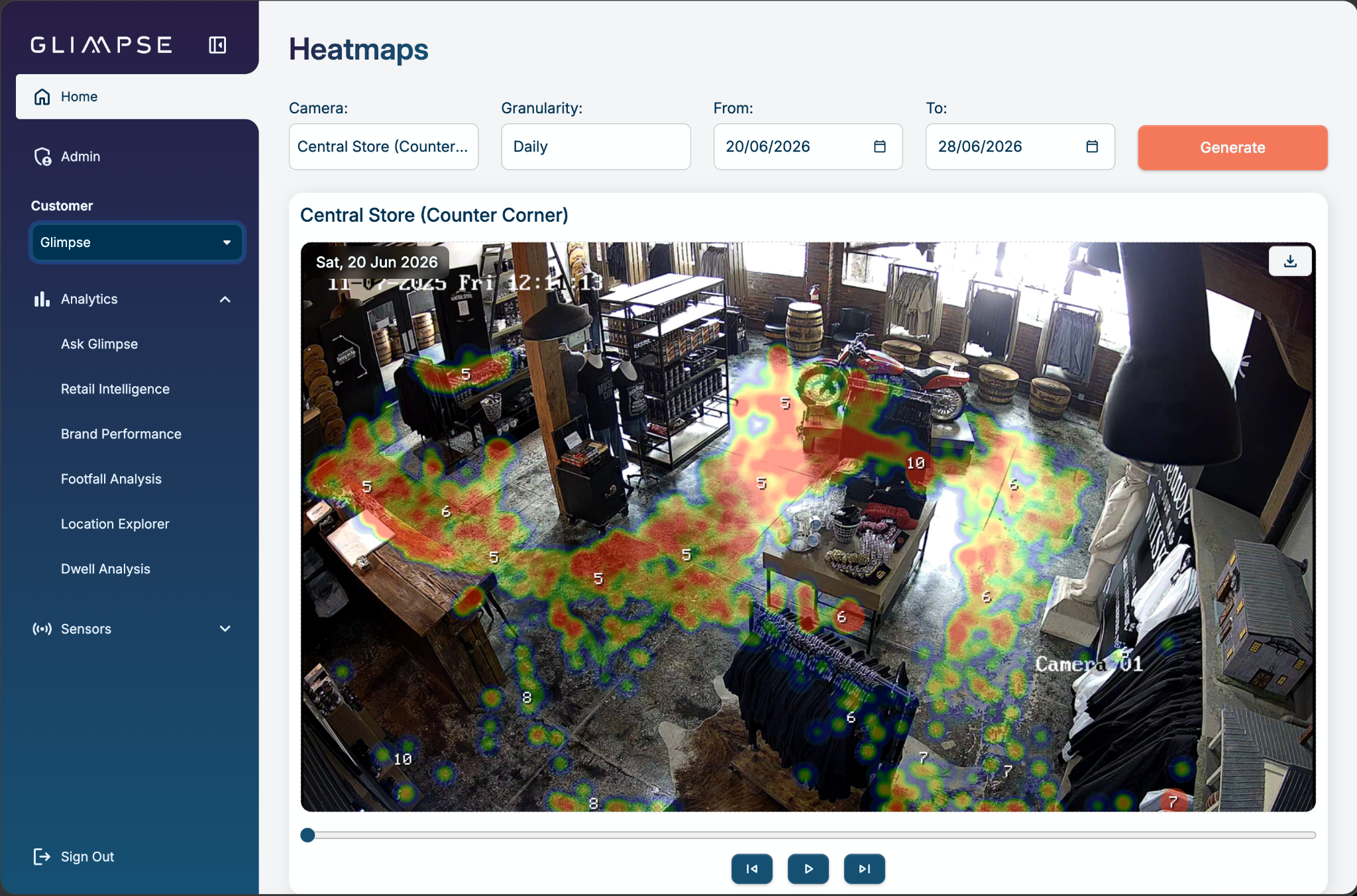
Camera-based systems run computer vision on video from existing CCTV. They need no new hardware at the door, and the same cameras can measure dwell, flow, heatmaps, queues and engagement on the shop floor. The trade-off is that security cameras were not placed for counting, so accuracy depends on the view and has to be validated camera by camera.
Many estates end up with a mix: cameras where the views are good, sensors where they are not, and a standalone device for a kiosk or pop-up with no cameras at all. What makes it one system rather than three is that every count lands in the same platform with the same definitions.
How accurate is a people counting system?
Suppliers quote figures in the high nineties for overhead and camera-based counting, and lower for beams and Wi-Fi. The figure that matters is not the one on the datasheet but the one measured in your store, at your busiest door, at peak. Accuracy is only knowable through validation: a manual count of the same people over the same period, compared with what the system reported. A system that has never been validated in the installation has an unknown accuracy, whatever the brochure says.
Accuracy also decays. Fixtures move, a door is propped open, a camera is nudged during a refit, and a count that was right at installation quietly drifts. A good system makes this visible, with checks such as comparing daily entries against exits, and re-validates when something changes.
Is a people counting system GDPR compliant?
It can be, and the deciding factor is what the system keeps. A count is a number, not a person: a record that says one person crossed line 3 at 14:02 heading in cannot be linked to anyone, so it is anonymous data and falls outside UK GDPR. A system that stores video, sends it to the cloud, or uses facial recognition is processing personal data and carries the full set of obligations. The questions to ask a supplier are therefore simple: where is the video processed, is any of it stored, and is anything retained that could identify a person.
Where people counting systems are used
Retail is the largest user: monitoring footfall by store and entrance, calculating capture rate against passers-by, and conversion when the counts are joined to transactions. Shopping centres count at entrances and along malls to report footfall to tenants and investors. Transport operators count passengers through gatelines, along platforms and on trains and buses. Property owners measure audiences at screens and displays for retail media.
How to choose a people counting system
You can buy a people counter from a dozen suppliers, and at a single door most of them will count well. The choice of system therefore depends on questions beyond the door.
- What else will it need to measure? If the answer is ever dwell, flow, queues or occupancy on the shop floor, a system built on cameras avoids a second installation later.
- Can it use the cameras you already own? Existing CCTV means no new hardware to be installed at every door, giving a faster rollout and one less thing on the ceiling, provided the views are validated.
- How is accuracy proven? Ask for the validation method, the results per door, and what happens when a view changes.
- How does it handle repeat crossings? De-duplication across entrances and cameras is what turns a count of door crossings into visitors.
- Can you get the data out? A portal is the minimum; scheduled reports and an API let the counts meet sales and rota data in your own tools.
- What leaves the building? Counts and metadata only, processed on site, with no video stored and no facial recognition.
- Who looks at the numbers with you? A count that nobody reviews changes nothing. Ask what the supplier does after installation.
Cost follows the same split. A hardware-per-door system is priced by entrance, plus installation and a software licence. A camera-based system is priced on the cameras and sites it processes, with little or no new hardware. Either way, the useful comparison is cost against what the system will measure, not cost against another counter.
Glimpse provides a people counting system built on existing CCTV, with Glimpse Sensors and the standalone Glimpse in a Box device where cameras do not reach. Video is processed at the edge and never stored, every installation is validated against manual counts with an average accuracy of 97%, counts are de-duplicated across doors and cameras, and the data is delivered at minute level through the Portal, scheduled reports and a REST API.
Also known as: People counter system, Footfall counting system, Visitor counting system, Footfall system